Continuous Desizing on Padding Ranges: Maintenance Issues That Affect Results
Continuous desizing is often discussed as a chemistry problem. On the mill floor, it is just as often a maintenance problem.
A desizing enzyme can only perform consistently when the padding range delivers controlled pickup, even fabric travel, reliable temperature exposure, and clean wash-off. If the range is drifting, the enzyme sees a different process from shift to shift. That shows up as patchy wet-out, residual size drag, shade-risk in dyeing, harsh handle, and unnecessary reprocessing.
For pretreatment managers evaluating a textile desizing enzyme supplier for fabric mills, the right question is not only “Will this enzyme remove starch?” It is also “Will the program hold steady across real padding range conditions?”
Enzymebridge supports cotton mills with desizing guidance built around operating windows, maintenance discipline, and downstream readiness.
Where maintenance starts to affect desizing
In a continuous padding range, small mechanical changes can create large fabric results. The common failure pattern is not a dramatic breakdown. It is gradual loss of control.
Typical signs include:
- Uneven wet-out across the width
- Variable absorbency after desizing
- Crease marks or rope-like tension history
- Fabric that enters scouring with inconsistent hand
- Localized starch carryover near selvedges
- Higher dyeing correction work
- Operators increasing chemical addition to compensate for mechanical drift
When the padding range is not stable, extra enzyme addition may mask the issue temporarily, but it does not correct uneven liquor application, poor dwell control, or weak washing.
Key padding range maintenance checkpoints
1. Padder nip condition and pressure balance
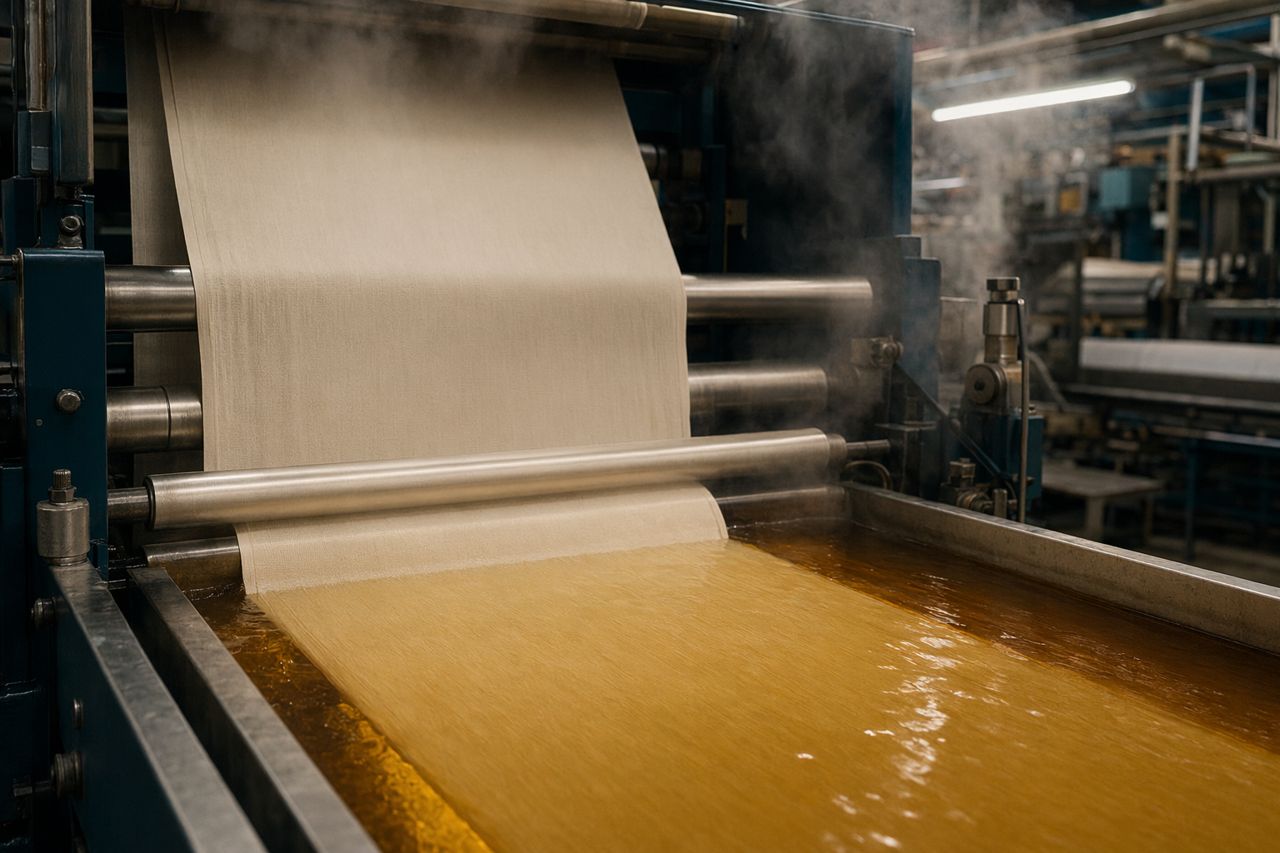
The padder is the first control point. Worn roll covers, uneven nip pressure, or poor roll alignment can change pickup from side to side.
Look for:
- Edge-to-center wet-out difference
- Repeating bands that track with roll rotation
- Slippage at higher line speed
- Operators adjusting squeeze pressure frequently to chase pickup
A desizing program should be validated against realistic pickup behavior, but the range still needs a stable nip. If the nip is not consistent, the enzyme distribution will not be consistent.
2. Liquor ratio discipline in the saturator
Continuous systems depend on stable liquor strength. Make-up water swings, poor tank level control, and irregular replenishment can dilute the working bath or concentrate contaminants.
Maintenance and operations should review:
- Tank level response during speed changes
- Agitation performance
- Cleanliness of the saturator and feed lines
- Carry-in from previous processing steps
- Fresh liquor preparation sequence
A controlled liquor environment helps the enzyme stay within its working window and supports repeatable desizing from beam to beam.
3. Fabric tracking and width control
Cotton fabric that wanders, wrinkles, or runs with unstable tension will not wet out evenly. Selvage areas are especially vulnerable when guide rolls, spreaders, or edge sensors are neglected.
Check for:
- Selvedge curling before the padder
- Creasing at entry guides
- Poor bow and skew control
- Fabric hesitation around driven rolls
- Uneven contact in steam or dwell sections
Good enzyme chemistry cannot correct mechanical fabric distortion. Stable travel protects both desizing efficiency and final fabric handle.
4. Temperature window reliability
Enzymatic desizing depends on maintaining a suitable temperature range through the pad bath and dwell zone. Steam trap issues, condensate accumulation, fouled heat exchange surfaces, or unstable hood conditions can push the process out of control.
Maintenance checks should include:
- Steam delivery stability
- Condensate removal
- Sensor placement and response
- Cold zones near doors, edges, or air leaks
- Heat recovery surfaces that may be fouled
The goal is not maximum heat. The goal is a stable temperature window that supports starch breakdown without creating avoidable fabric stress.
5. pH control and chemical carryover
pH drift can reduce desizing consistency and complicate the transition into scouring or dyeing. Carryover from upstream sizing, storage, or chemical preparation can also interfere with control.
Review:
- Dosing pump repeatability
- Chemical feed line condition
- Mixing order in the preparation tank
- Sensor cleanliness and calibration records
- Shift-to-shift pH documentation
For audit-ready production, pH control should be documented as a routine operating parameter, not reconstructed after a shade issue appears.
6. Dwell time and line speed control
Continuous desizing requires enough controlled contact time for starch-size breakdown. Line speed changes, fabric accumulation issues, or inconsistent batching between sections can shorten the effective dwell period.
Watch for:
- Speed increases made without process review
- Accumulator instability
- Fabric bypassing intended dwell path
- Steam chamber loading variation
- Poor synchronization between padding and washing sections
If the mill needs higher throughput, the desizing program should be reviewed as a system: enzyme selection, temperature window, pickup, dwell, and washing together.
7. Washing section performance
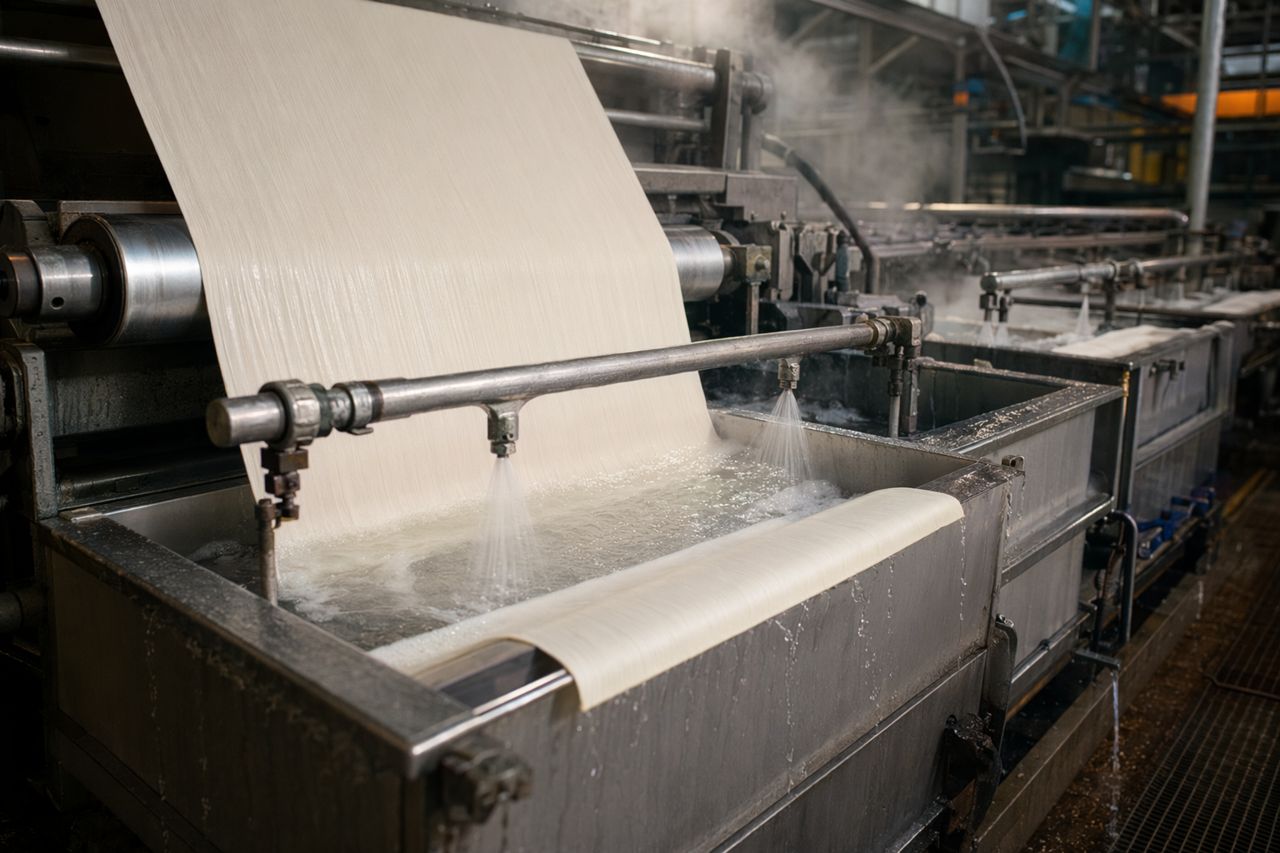
Desizing does not end when starch is loosened. It must be removed from the fabric. Weak wash-off allows degraded size and soluble residues to remain in the cloth, creating problems during scouring, bleaching, dyeing, or finishing.
Maintenance priorities include:
- Counterflow water balance
- Spray bar cleanliness
- Squeeze roll condition between wash boxes
- Drainage and overflow behavior
- Lint and sludge control
- Heat consistency in wash zones
A clean wash section supports softer handle, better absorbency, and lower reprocessing risk.
Common symptom-to-cause map
| Mill observation | Likely range-related contributor | What to inspect first |
|---|---|---|
| Uneven wet-out across width | Nip imbalance or fabric tracking | Padder roll condition, pressure balance, edge control |
| Residual size near selvedges | Poor edge wetting or width distortion | Spreaders, guide rolls, selvedge curl, liquor contact |
| Variable absorbency after desizing | Bath drift or dwell variation | Tank level, replenishment, temperature stability, speed records |
| Harsh handle after pretreatment | Incomplete size removal or weak washing | Wash boxes, squeeze rolls, spray bars, water flow pattern |
| Increased dyeing corrections | Pretreatment inconsistency | Desizing records, pH/temperature logs, wash-off performance |
| Operators increasing addition rate | Mechanical process drift | Nip, bath strength, dwell, and wash section before chemistry changes |
A practical maintenance rhythm for continuous desizing
Per shift
- Confirm padder pressure balance and fabric tracking
- Check bath level, appearance, and replenishment behavior
- Review temperature and pH readings against the approved window
- Inspect wash-off flow and spray pattern visually
- Record any line speed changes or stoppages that affect dwell
Daily
- Clean strainers, accessible spray bars, and lint collection points
- Review wet-out and absorbency feedback from downstream processes
- Check dosing pump response and tank agitation
- Verify that shift records are complete and legible
Weekly or planned downtime
- Inspect roll covers, bearings, seals, and alignment
- Review steam traps, condensate lines, and heat transfer surfaces
- Clean tanks and pipework where starch residues accumulate
- Compare maintenance findings with dyehouse feedback and rework data
At style, count, or sizing changes
- Confirm the starch load and size recipe history where available
- Recheck the desizing operating window before full production
- Validate wet-out and downstream readiness on the first production length
- Avoid assuming the previous setting will carry across a different greige input
What a desizing enzyme supplier should support
A mill-ready supplier should do more than ship chemistry. For continuous padding ranges, support should include:
- Operating window recommendations that fit mill equipment
- Guidance for pickup, dwell, pH, and temperature control
- Troubleshooting support that separates chemistry issues from range maintenance issues
- Documentation support for production records and customer audits
- Practical recommendations for reducing reprocessing and dyeing risk
Enzymebridge works with cotton textile mills to align desizing enzyme selection with actual padding range behavior. The target is controlled starch removal, consistent wet-out, clean wash-off, and fabric that enters downstream preparation with fewer surprises.
Watch the one-minute maintenance walk-through
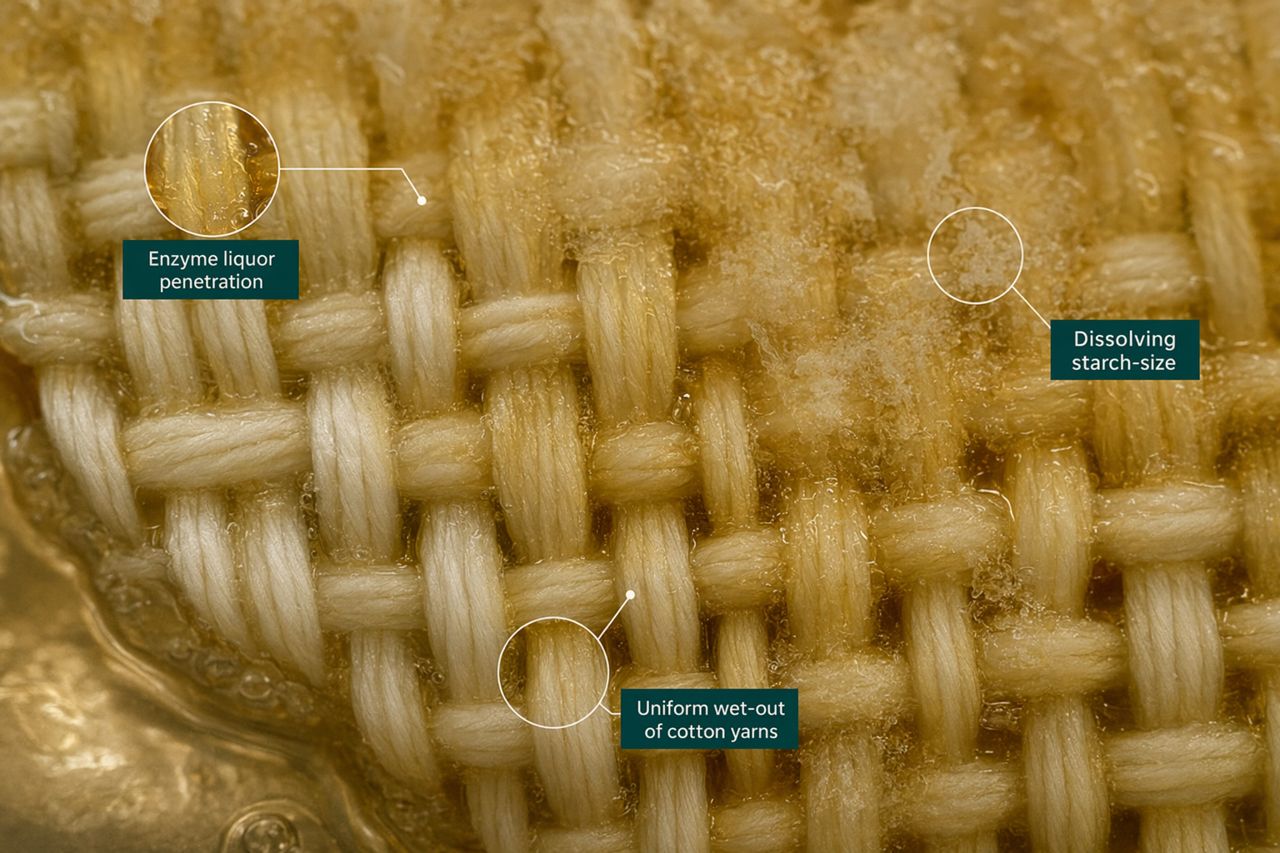
A faceless explainer video on this page shows the padding range as a controlled fabric journey: greige cotton enters the nip, enzyme liquor penetrates the weave, starch-size overlays dissolve, and maintenance checkpoints appear over the line as operators monitor pH, temperature, dwell, and wash-off.
Planning a desizing review?
If your mill is seeing inconsistent wet-out, residual size, or dyeing variation after continuous desizing, Enzymebridge can help review the process window and enzyme fit.
Use the on-site request a quote form to share your fabric type, current desizing route, line setup, and the issue you want to reduce. We will respond with a practical recommendation for your mill conditions.